
Fic for Kameo: Lessons on Giving and Taking
Jun. 4th, 2026 11:42 pm![[personal profile]](https://www.dreamwidth.org/img/silk/identity/user.png) holmesticemods posting in
holmesticemods posting in ![[community profile]](https://www.dreamwidth.org/img/silk/identity/community.png) holmestice
holmesticeTitle: Lessons on Giving and Taking
Recipient: Kameo (brainygiirl)
Author: REDACTED
Verse: Sherlock (TV)
Characters/Pairings: Sherlock Holmes/John Watson
Rating: Explicit
Warnings: None
Summary: John will always follow where Sherlock leads. And occasionally, Sherlock will do the same.
Read on Ao3: Lessons in Giving and Taking
Recipient: Kameo (brainygiirl)
Author: REDACTED
Verse: Sherlock (TV)
Characters/Pairings: Sherlock Holmes/John Watson
Rating: Explicit
Warnings: None
Summary: John will always follow where Sherlock leads. And occasionally, Sherlock will do the same.
Read on Ao3: Lessons in Giving and Taking
Daily Happiness
Jun. 4th, 2026 07:17 pmtorachan1. I had a meeting this morning that felt very productive. I think we've finally gotten things hashed out in terms of procedures and how things will actually function versus the IT department's theoretical (but utterly impractical and impossible in reality) ideas that we had been told is how we would have to use the new system.
2. We had Trader Joe's frozen kung pao chicken tonight for dinner and it's been quite a while (maybe even like six months or so) since we've had it and I forgot how good it is. We were making it a lot for a while and while I never got tired of it, I do feel like having it again after such a long time made me appreciate it more.
3. Saw this baby crow while out on our walk tonight. He was just stopped there and didn't fly or hop away when we walked by. Seemed like maybe he was waiting for his parents, so I hope they came back soon!

4. Jasper!

2. We had Trader Joe's frozen kung pao chicken tonight for dinner and it's been quite a while (maybe even like six months or so) since we've had it and I forgot how good it is. We were making it a lot for a while and while I never got tired of it, I do feel like having it again after such a long time made me appreciate it more.
3. Saw this baby crow while out on our walk tonight. He was just stopped there and didn't fly or hop away when we walked by. Seemed like maybe he was waiting for his parents, so I hope they came back soon!
4. Jasper!
Thursday Recs
Jun. 4th, 2026 08:37 pmsoc_puppet posting in queerly_belovedTime to check in with Thursday Recs!
Do you have a rec for this week? Just reply to this post with something queer or queer-adjacent (such as, soap made by a queer person that isn't necessarily queer themed) that you'd, well, recommend. Self-recs are welcome, as are recs for fandom-related content!
Or have you tried something that's been recced here? Do you have your own report to share about it? I'd love to hear about it!
Do you have a rec for this week? Just reply to this post with something queer or queer-adjacent (such as, soap made by a queer person that isn't necessarily queer themed) that you'd, well, recommend. Self-recs are welcome, as are recs for fandom-related content!
Or have you tried something that's been recced here? Do you have your own report to share about it? I'd love to hear about it!
Daily Check-In
Jun. 4th, 2026 09:01 pmmecurtin posting in fandom_checkinThis is your check-in post for today. The poll will be open from midnight Universal or Zulu Time (8pm Eastern Time) on Thursday, June 4, to midnight on Friday, June 5 (8pm Eastern Time).
Please, talk about how things are going for you in the comments, ask for advice or help if you need it, or just discuss whatever you feel like.
Poll #34687 Daily check-in poll
Open to: Access List, detailed results viewable to: Access List, participants: 16
How are you doing?
I am OK
9 (56.2%)
I am not OK, but don't need help right now
7 (43.8%)
I could use some help
0 (0.0%)
How many other humans live with you?
I am living single
6 (37.5%)
One other person
5 (31.2%)
More than one other person
5 (31.2%)
Please, talk about how things are going for you in the comments, ask for advice or help if you need it, or just discuss whatever you feel like.
Doin' that thing you do
Jun. 4th, 2026 04:34 pmgwynIt's been three weeks now that I've had new kitty and things seem to be going very well. I did have embarrassingly bad stuff with the ferry on the way over, less said about that the better, but I did make it down to Gig Harbor and the instant I met her, I was in love. She had been sitting in the foster person's window well, and as soon as the door opened, she came running to meet me, and loves to head-butt and rub her face on yours. She's such a lovebug that it's bananas: she just wants to be next to you or on you or rubbing against you at all times.
So it was no question that she was coming home with me. The person who runs the group and the foster coordinator had said something funny to me--"I'll go get her from the prison and we should be back in plenty of time"-- and I thought maybe that was their inside joke about a shelter with cages or something. But as I was driving down, I went past a sign that said "Women's Correctional Facility Purdy" and multiple signs saying "Do not pick up hitchhikers." I still didn't quite put two and two together but at the foster's house, she mentioned the prison again, and at my confusion, she finally said "Oh, did she not tell you about the prison program?" Apparently this rescue group has connections with one of those prison programs where they train dogs (most commonly) or work with cats to make them adoptable (in this case, they work with feral kittens and feral adults who show interest in being with humans, as well as other cats that are going to be adopted).
The first time I saw one of these programs was on Pitbulls and Parolees, and I thought it was so cool--the inmates learn really valuable skills that can translate to the post-prison world, and they get to take care of another being that depends on them. Most of these programs have waiting lists, because everyone wants to be part of them. The inmate who cared for Hazel (what I have named her) gave me a great list of things she likes, her behaviors, etc. I've always thought these programs are so cool and I've been joking that Hazel was in prison before she came here, but it's the first time I've had direct experience.
She settled in really fast. She's just really even tempered, and she loooves to chase her tail, anywhere, any time. (She even chased her tail inside a paper bag that I was putting clothing to donate to the food bank's clothes line and fortunately didn't destroy the clothes, but did destroy the paper bag.) She desperately wants to go outside, so I have to figure out some kind of catio situation--she escaped the other day and immediately beelined under the deck, so this needs to be addressed. But she was a perfect angel on the drive home, not even making a peep on the road or on the ferry, which is loud and stinky.
She has the tiniest, sweetest meow, and dainty little feet like Olive's, but they are deadly when she puts them on like my femoral artery and it reminds me a lot of my dear miss Ollie. At night, she wants to be so right up on my head that she does this Alien face-hugger thing and it's this horrible battle of wills because I cannot breathe but she just tries over and over and I have to keep pushing her away. I do love her, but she has definite opinions. She is a bit of a chonk, but I think I can get her weight down a little. And she had all but her bottom canine teeth removed because of dental disease, but she can still bite, as my nose can attest. Her finickiness with food is slightly annoying, though.
( Pics of Hazel )
Yikes, can someone tell me how the hell to make those pictures normal size??
In other news, I had chemo last week and Dr. Li came in with "big news": the fuckers who bought the Polyclinic, where I have been going my whole adult life and which had a great reputation around the area for like 80 years, are shutting down his department. So no more hematology oncology. So he has two months to find placements for all his hundreds of patients, and there are limited spots where those of us in active treatment can really find this type of care. It's not that you can't go to a general oncologist, but they don't know the ins and outs of this very weird rare cancer, and blood cancers have their own special needs. I really don't want to go to Fred Hutch, despite it being a premier cancer center, for various reasons, so he's going to try to send me to the system I had radiation at and still see a doctor as well as a physical therapist at, but I don't know how long they're going to maintain their identity, since they "merged" with a large Catholic hospital system a few years back (I have very strong feelings about women's health at Catholic hospitals and am really angry that multiple Catholic systems are now running most of the hospitals here). I have no idea what to expect, if I'll get another horrible oncologist like the one I had at the beginning, or what. I'm filled with anxiety.
Because he's a great doc, though, he was careful to go through the calendar and my treatment schedule to make sure my prescription for pomalyst, the thalidomide analog that basically keeps me alive, will get phoned in before shuttering the office so my treatment isn't interrupted (though I have no idea how this whole thing will work and how soon I would be able to see my new doctor). So as of July 31, he's in early retirement (as is his great receptionist), and I will have to get used to a new normal somewhere else that I know nothing about.
Man, I'm so glad i have a cat with all this happening. I would hate to not have something to snuggle (her fur is SO SOFT). I still miss Blues like mad, and I still cry a lot about him, but it helps so much to be able to kiss a kitty head.
So it was no question that she was coming home with me. The person who runs the group and the foster coordinator had said something funny to me--"I'll go get her from the prison and we should be back in plenty of time"-- and I thought maybe that was their inside joke about a shelter with cages or something. But as I was driving down, I went past a sign that said "Women's Correctional Facility Purdy" and multiple signs saying "Do not pick up hitchhikers." I still didn't quite put two and two together but at the foster's house, she mentioned the prison again, and at my confusion, she finally said "Oh, did she not tell you about the prison program?" Apparently this rescue group has connections with one of those prison programs where they train dogs (most commonly) or work with cats to make them adoptable (in this case, they work with feral kittens and feral adults who show interest in being with humans, as well as other cats that are going to be adopted).
The first time I saw one of these programs was on Pitbulls and Parolees, and I thought it was so cool--the inmates learn really valuable skills that can translate to the post-prison world, and they get to take care of another being that depends on them. Most of these programs have waiting lists, because everyone wants to be part of them. The inmate who cared for Hazel (what I have named her) gave me a great list of things she likes, her behaviors, etc. I've always thought these programs are so cool and I've been joking that Hazel was in prison before she came here, but it's the first time I've had direct experience.
She settled in really fast. She's just really even tempered, and she loooves to chase her tail, anywhere, any time. (She even chased her tail inside a paper bag that I was putting clothing to donate to the food bank's clothes line and fortunately didn't destroy the clothes, but did destroy the paper bag.) She desperately wants to go outside, so I have to figure out some kind of catio situation--she escaped the other day and immediately beelined under the deck, so this needs to be addressed. But she was a perfect angel on the drive home, not even making a peep on the road or on the ferry, which is loud and stinky.
She has the tiniest, sweetest meow, and dainty little feet like Olive's, but they are deadly when she puts them on like my femoral artery and it reminds me a lot of my dear miss Ollie. At night, she wants to be so right up on my head that she does this Alien face-hugger thing and it's this horrible battle of wills because I cannot breathe but she just tries over and over and I have to keep pushing her away. I do love her, but she has definite opinions. She is a bit of a chonk, but I think I can get her weight down a little. And she had all but her bottom canine teeth removed because of dental disease, but she can still bite, as my nose can attest. Her finickiness with food is slightly annoying, though.
( Pics of Hazel )
Yikes, can someone tell me how the hell to make those pictures normal size??
In other news, I had chemo last week and Dr. Li came in with "big news": the fuckers who bought the Polyclinic, where I have been going my whole adult life and which had a great reputation around the area for like 80 years, are shutting down his department. So no more hematology oncology. So he has two months to find placements for all his hundreds of patients, and there are limited spots where those of us in active treatment can really find this type of care. It's not that you can't go to a general oncologist, but they don't know the ins and outs of this very weird rare cancer, and blood cancers have their own special needs. I really don't want to go to Fred Hutch, despite it being a premier cancer center, for various reasons, so he's going to try to send me to the system I had radiation at and still see a doctor as well as a physical therapist at, but I don't know how long they're going to maintain their identity, since they "merged" with a large Catholic hospital system a few years back (I have very strong feelings about women's health at Catholic hospitals and am really angry that multiple Catholic systems are now running most of the hospitals here). I have no idea what to expect, if I'll get another horrible oncologist like the one I had at the beginning, or what. I'm filled with anxiety.
Because he's a great doc, though, he was careful to go through the calendar and my treatment schedule to make sure my prescription for pomalyst, the thalidomide analog that basically keeps me alive, will get phoned in before shuttering the office so my treatment isn't interrupted (though I have no idea how this whole thing will work and how soon I would be able to see my new doctor). So as of July 31, he's in early retirement (as is his great receptionist), and I will have to get used to a new normal somewhere else that I know nothing about.
Man, I'm so glad i have a cat with all this happening. I would hate to not have something to snuggle (her fur is SO SOFT). I still miss Blues like mad, and I still cry a lot about him, but it helps so much to be able to kiss a kitty head.

We’re relaxed
Jun. 4th, 2026 11:01 pm![[syndicated profile]](https://www.dreamwidth.org/img/silk/identity/feed.png) bad_machinery_feed
bad_machinery_feed
It’s been a long time since we’ve seen Sarah Grote (Wicked Things #2 in 2020, I believe) and something has definitely happened to her but I don’t know what. Lottie is still preoccupied with babies slithering out and having a drink. I don’t think even a trained midwife could disabuse her of this notion.
some good things
Jun. 4th, 2026 11:41 pmkaberett- was invited to read A Bedtime Story :)
- fresh new bedlinen
- Eating More Food has in fact fixed the muscle soreness, again
- successfully achieved a favour for a person (via venturing into the Warhammer shop halfway down the hill)
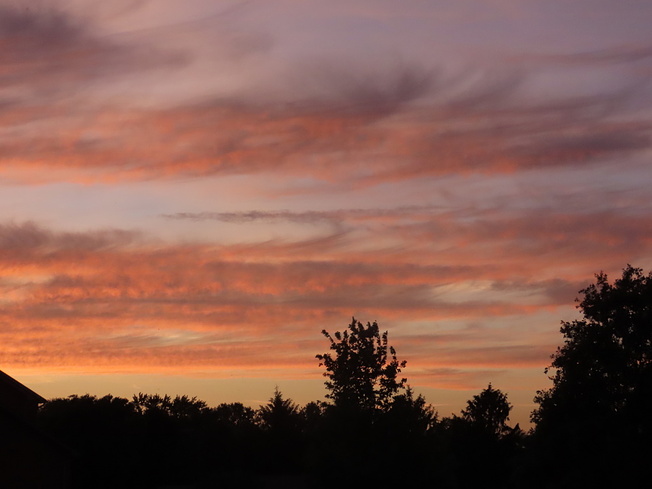
- after the torrential rain, the sunset
The Friday Five for 5 June 2026: Books!
Jun. 4th, 2026 03:08 pmanais_pf posting in thefridayfiveThese questions were written by ![[livejournal.com profile]](https://www.dreamwidth.org/img/external/lj-userinfo.gif) canadiangirl16.
canadiangirl16.
1. Do you enjoy reading?
2. What is the first book you remember reading?
3. Who is your favourite author?
4. What is your favourite book?
5. What is the last book you read and the first you'll read next?
Copy and paste to your own journal, then reply to this post with a link to your answers. If your journal is private or friends-only, you can post your full answers in the comments below.
If you'd like to suggest questions for a future Friday Five, then do so on DreamWidth or LiveJournal. Old sets that were used have been deleted, so we encourage you to suggest some more!
**Remember that we rely on you, our members, to help keep the community going. Also, please remember to play nice. We are all here to answer the questions and have fun each week. We repost the questions exactly as the original posters submitted them and request that all questions be checked for spelling and grammatical errors before they're submitted. Comments re: the spelling and grammatical nature of the questions are not necessary. Honestly, any hostile, rude, petty, or unnecessary comments need not be posted, either.**
canadiangirl16.1. Do you enjoy reading?
2. What is the first book you remember reading?
3. Who is your favourite author?
4. What is your favourite book?
5. What is the last book you read and the first you'll read next?
Copy and paste to your own journal, then reply to this post with a link to your answers. If your journal is private or friends-only, you can post your full answers in the comments below.
If you'd like to suggest questions for a future Friday Five, then do so on DreamWidth or LiveJournal. Old sets that were used have been deleted, so we encourage you to suggest some more!
**Remember that we rely on you, our members, to help keep the community going. Also, please remember to play nice. We are all here to answer the questions and have fun each week. We repost the questions exactly as the original posters submitted them and request that all questions be checked for spelling and grammatical errors before they're submitted. Comments re: the spelling and grammatical nature of the questions are not necessary. Honestly, any hostile, rude, petty, or unnecessary comments need not be posted, either.**
Day 4: Write Every Day
Jun. 4th, 2026 01:15 pmgoddess47 posting in goddess_writesIntro/FAQ
Quote for today:
“If you can’t be kind, at least be vague.” Judith Martin/Miss Manners
Quotes are courtesy ofarwen_oak who gave me a lovely assortment of random quotes.
When you reply, reply to the latest post. You can put multiple days on your reply, if you missed any days.
PLEASE If I make a mistake and don't count you on a day, please let me know.
Day 4:goddess47, shippen_stand,
Day 3:goddess47, china_shop, badly_knittted, sanguinity, cornerofmadness, carenejeans, shippen_stand, sylvanwitch,
Day 2:goddess47, sanguinity, badly_knitted, ysilme, sylvanwitch, the_siobhan, dswdiane, cornerofmadness, china_shop, shippenstand, carenejeans,
Day 1:goddess47, badly_knitted, sylvanwithch, dswdiane, sanguintity, cornerofmadness, carenejeans, shippen_stand, ysilme, china_shop,
Quote for today:
“If you can’t be kind, at least be vague.” Judith Martin/Miss Manners
Quotes are courtesy of
arwen_oak who gave me a lovely assortment of random quotes.When you reply, reply to the latest post. You can put multiple days on your reply, if you missed any days.
PLEASE If I make a mistake and don't count you on a day, please let me know.
Day 4:
goddess47, shippen_stand, Day 3:
goddess47, china_shop, badly_knittted, sanguinity, cornerofmadness, carenejeans, shippen_stand, sylvanwitch, Day 2:
goddess47, sanguinity, badly_knitted, ysilme, sylvanwitch, the_siobhan, dswdiane, cornerofmadness, china_shop, shippenstand, carenejeans, Day 1:
goddess47, badly_knitted, sylvanwithch, dswdiane, sanguintity, cornerofmadness, carenejeans, shippen_stand, ysilme, china_shop,The best Project Hail Mary review, limerick-stylée
Jun. 4th, 2026 01:09 pmpetraI swear I didn't write this and you know it wasn't me, because I would've been spamming you all with Grace/Rocky since March if it had been.
But! Limericks! The third one is especially great.
But! Limericks! The third one is especially great.
Analysis and discussion of the "uncut" versions of Robert Heinlein's novels
Jun. 4th, 2026 10:41 amglaurungAfter Heinlein's death, some of his books were reissued in new "uncut" editions. AFAIK, there are four: Red Planet, Puppet Masters, Stranger in a Strange Land, and Podkayne of Mars. In each case, changes were insisted on by editors, and after Heinlein's death, Virginia Heinlein renegotiated contracts and specified that the original unaltered manuscripts be used instead of the originally published versions.
1 Red Planet, 1949 ( Read more... )
2 Puppet Masters (1951) ( Read more... )
3 Stranger in a strange land (1961) ( Read more... )
4 Podkayne of Mars (1963)
As originally written, Podkayne dies at the end. Heinlein's editor demanded that the final chapter (narrated by Podkayne's brother) be altered to have her survive instead. Modern versions of the novel restore the original ending, or provide both endings. The final chapter is just a few pages long.
I strongly dislike this novel regardless of which version of the final chapter it has, so I can't speak to which might be better.
1 Red Planet, 1949 ( Read more... )
2 Puppet Masters (1951) ( Read more... )
3 Stranger in a strange land (1961) ( Read more... )
4 Podkayne of Mars (1963)
As originally written, Podkayne dies at the end. Heinlein's editor demanded that the final chapter (narrated by Podkayne's brother) be altered to have her survive instead. Modern versions of the novel restore the original ending, or provide both endings. The final chapter is just a few pages long.
I strongly dislike this novel regardless of which version of the final chapter it has, so I can't speak to which might be better.
myjetpack_feed ALT
ALTI’m coming to Germany! Come along and see me talk, read comics and sign books. Links for more info are at www.tomgauld.com
Jaunting out for cultural reasons
Jun. 4th, 2026 02:41 pmoursinSome years ago I advised a composer who was composing an opera about A Historical Figure about whom I am something of a Nexpert, and I am now on their mailing list and get info on their current activities and broadcasts and so on -
And I was invited to the Private View of this, taking place at a venue which is only a reasonable bus-ride and short walk away.
Also giving me the chance to see a small part of the nearish locality with which I am relatively unfamiliar, and which has its charms.
I am not sure I was entirely enthused by the artworks - there was one installation of ceramics where I wished I had someone there to whom I could murmur that they had an urgent phallic look -
My main problem with the venue, however, was the acoustics - I think it was the kind of space where once you got a certain mass of people conversing it would always have been a bit trying for me and my hearing aids, but combined with the ambient music coming out of the various speakers, not optimal at all. (Though maybe its own soundscape....)
I don't think there was anyone there I knew besides The Composer - mostly of a younger generation and art/music people rather than groves of academe - and I didn't really get into much chat, but I did get 2 admiring comments on the green hair streaks and 1 compliment to my pendant (which I think I got at Wiscon, unless it was 4th St?).
However, I have had a sweet email from The Composer thanking me for coming.
The Restoration Game by Ken MacLeod
Jun. 4th, 2026 09:15 amjames_davis_nicoll
A programmer is dragged into a geopolitical squabble, complicated by untoward existential revelations.
The Restoration Game by Ken MacLeod
ART FOR ALEC/THEMONSTRUMOLOGIST: DO NOT KEEP TO YOURSELF
Jun. 4th, 2026 06:41 amholmesticemods posting in holmesticeTitle: Do Not Keep to Yourself
Recipient: Alec/themonstrumologist
Artist: REDACTED
Verse: Shekhar Home
Characters: Shekhar Home & Jayavrat Saini & Iraboty Adhyo & Mrs Henriques
Rating: G
Warnings: None
Summary: Getting together at Khasha Blanca
Note: So pleased to see you request these friends, this is set pre-end-of-episode-4 when everyone was having a good time… The quote is from Rabindranath Tagore’s The Gardener!
( Read more... )
Recipient: Alec/themonstrumologist
Artist: REDACTED
Verse: Shekhar Home
Characters: Shekhar Home & Jayavrat Saini & Iraboty Adhyo & Mrs Henriques
Rating: G
Warnings: None
Summary: Getting together at Khasha Blanca
Note: So pleased to see you request these friends, this is set pre-end-of-episode-4 when everyone was having a good time… The quote is from Rabindranath Tagore’s The Gardener!
( Read more... )